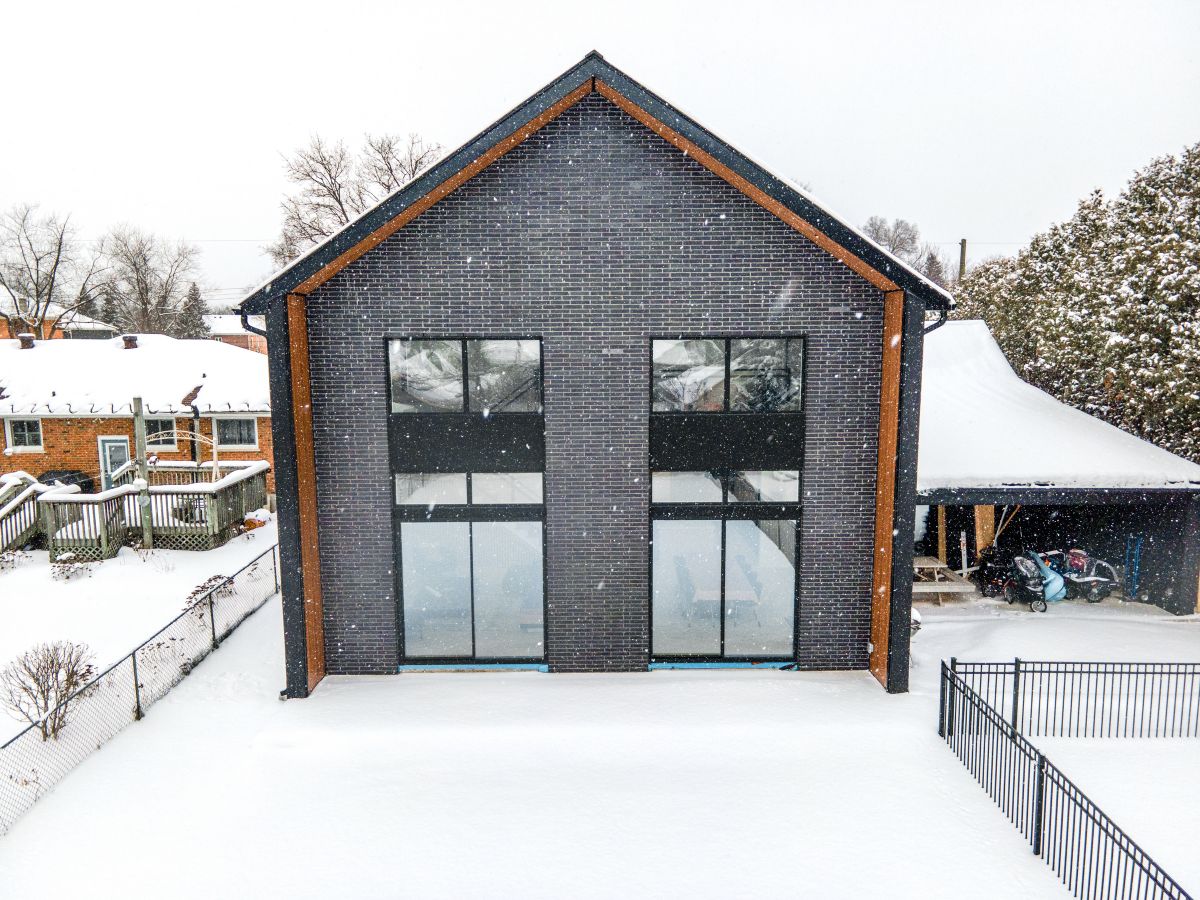

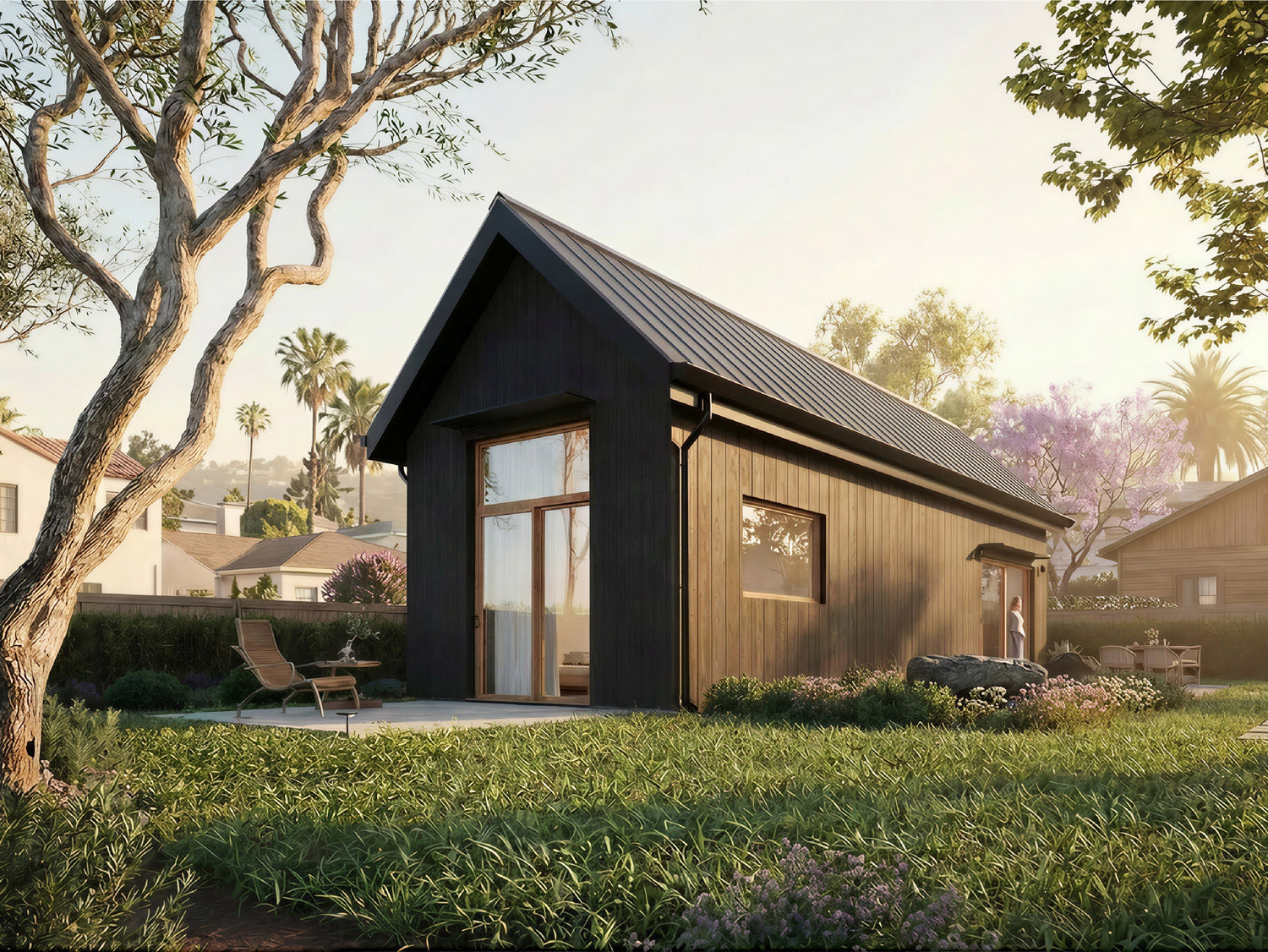
Project Overview: The Cabin / Accessory Dwelling Unit (ADU)
- One full bedroom
- One bathroom
- A kitchen with storage
- A flexible living / multifunctional space
- An additional loft area for kids or storage

Floor plans and a high-level cost summary of the 512 sq ft Steel Cabin / ADU
High-Level Cost Summary: ADU Construction Budget Breakdown
- Cost per square foot: $346 / sq ft (ADU cost per square foot)
- Grand total (reference estimate): $177,354
- 20% General Contractor markup: $26,116
- Admin fee: $6,529
- Design fee: $6,529
- Total building cost: $138,179 (estimated ADU construction cost)
 In the following sections, we walk through each category and highlight areas where substitutions or alternative choices may lead to cost savings.
Understanding the Cost Categories
- Roof structure
- Wall structure
- Foundation
- Windows & doors
- Loft area
- Labor
- Kitchen
- Bathroom
- Lighting
Roof Structure
This steel cabin features a vaulted ceiling with a rafter roof system, creating an open and airy interior. The roof structure is built using:
- Standard 2×12 framing
- LVL 1-3/4" × 16" ridge beam
- A 10:12 roof pitch with a bold exterior profile
The full roof assembly includes:
- Drywall ceiling finish
- 1/2" 4×8 Huber ZIP OSB sheathing
- Grace Ice & Water Shield
- 1×3 furring strips
- Insulation
- Matte black standing seam metal roofing
Additional roof-related costs may include snow guards, box gutters, downspouts, and specialty hardware.
Cost-saving opportunity:
Standing seam metal roofing is one of the most expensive roofing options. Homeowners looking to reduce costs could consider asphalt shingles or corrugated metal panels, which may cost half as much—or less—while still performing well, depending on climate and aesthetic goals.
Wall Structure
Wall construction costs typically include both structural and finish components. In this estimate, the wall system consists of:
- Black fiber cement exterior cladding
- 1×3 furring strips
- ZIP R-12 insulated panels
- 2×6 wall studs
- Insulation
- Interior drywall and related materials
Cost-saving opportunity:
Premium wall systems like ZIP R-12 panels offer excellent performance but come at a higher price. By switching to standard OSB sheathing, homeowners could save up to $3,000 in this design template, depending on insulation strategy and local code requirements.

Labor Costs
Labor is often the largest portion of a construction budget, and it varies dramatically by region. In this estimate, labor costs are based on ENR national averages, adjusted to local Missouri labor rates, with an average hourly rate of $62 per hour.
For comparison:
- New York: approximately $116.38/hour for carpentry labor
- Kansas City: approximately $67.03/hour
Different trades—such as carpenters, plumbers, electricians, and general laborers—carry different hourly rates depending on region and demand.
Recommendation:
Always obtain local quotes. Our design templates and construction documents make it easier to share clear information with builders and consultants, helping you receive more accurate and comparable labor estimates.

Windows & Doors
For this estimate, we selected aluminum-frame windows and doors from commonly available brands at retailers such as Lowe’s. While durable and modern in appearance, aluminum systems tend to be on the higher end of the cost spectrum.
Cost-saving opportunity:
Homeowners may get a quote by choosing fiberglass windows and doors, which offer strong thermal performance at a lower price point. Well-known alternatives include Andersen, Marvin, and Pella.
Many window manufacturers also offer bundle pricing, which can significantly reduce costs compared to purchasing units individually.
Foundation
This estimate assumes a concrete slab-on-grade foundation with basic site preparation. Costs include:
- Soil excavation
- Gravel base
- 12 mil vapor barrier
- Under-slab and perimeter insulation
- Concrete slab and footings
- Associated materials and labor
Foundation costs can vary substantially based on soil conditions, slope, frost depth, and local requirements, so this category should always be reviewed with a local engineer or contractor.

Kitchen, Bathroom, and Lighting
For finishes and fixtures, this estimate uses mid-range, widely available brands to establish a realistic baseline:
- Kitchen: IKEA cabinetry and fixtures, with a light wood and white palette
- Bathroom: Fixtures from suppliers such as Ferguson Home, IKEA, and Home Depot
- Lighting: A total of 19 fixtures, selected from West Elm
Cost variability:
This category is one of the most flexible in any project. Brand selection, material upgrades, and fixture choices can dramatically increase—or reduce—the final cost.

Final Thoughts on Accessory Dwelling Unit Cost, ADU Houseplans, and Budgeting

If you’re considering building a Steel Cabin or ADU, this breakdown is a strong starting point—and a helpful guide for conversations with local builders, contractors, and consultants.